
Why Anthropic acquired Bun.js? Future of Software Engineering from the angle of Big Tech
Anthropic has acquired BunJs. What is BunJs, why ANhtropic has acquired it, and what is the future of Software engineering from Anthropic perspective

Introduction:
The game just changed. Last week, Anthropic announced its acquisition of Bun:
https://bun.com/
, the high-performance JavaScript runtime. This isn’t just another tech acquisition: it’s a power move that signals where the future of coding is headed. When your AI coding tool hits a $1 billion run-rate in six months, you don’t just buy a startup for fun. You secure the critical infrastructure on which your entire empire is built.
What Exactly Did Anthropic Buy?
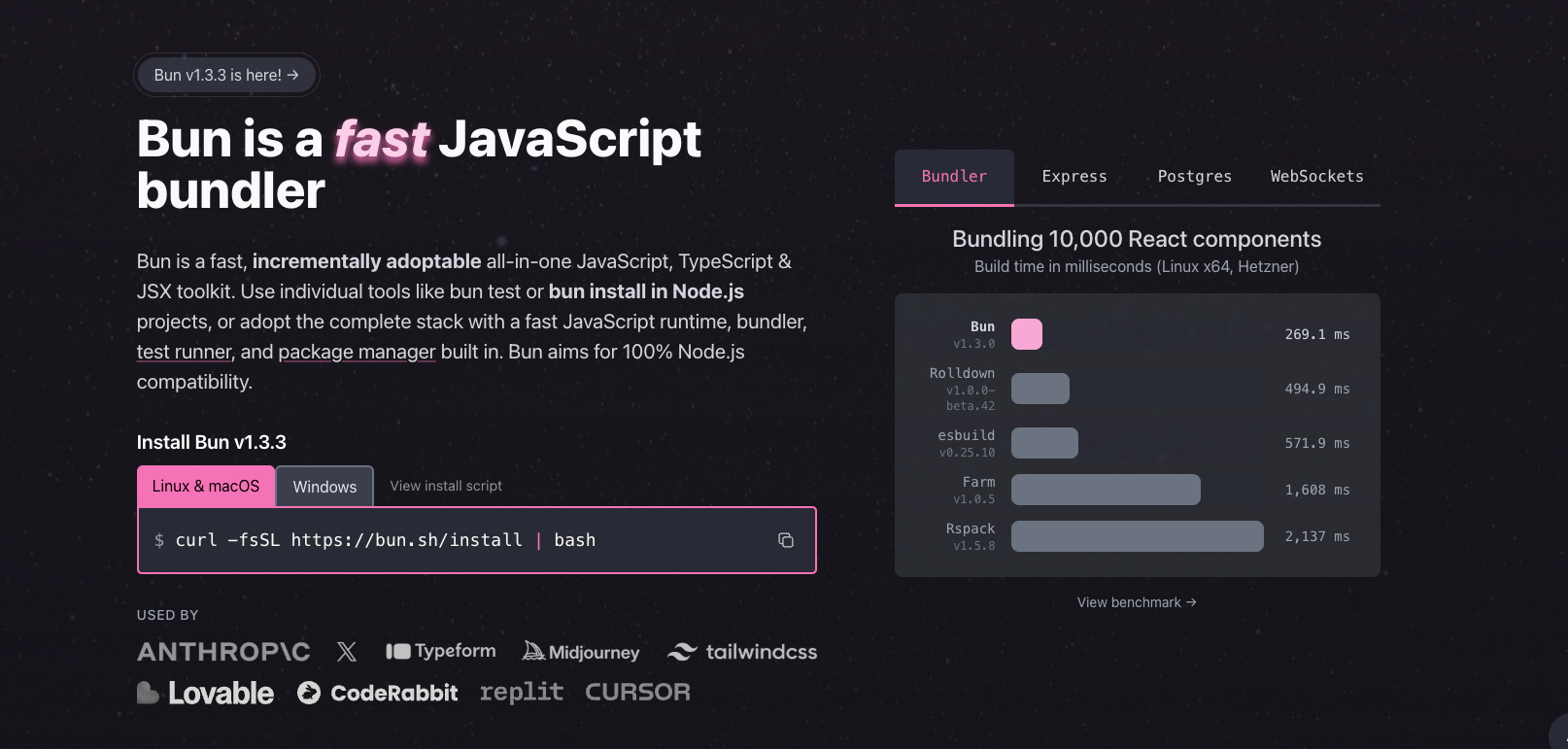
Bun is an all-in-one toolkit for JavaScript and TypeScript. Think of it as a Swiss Army knife that replaces Node.js, npm, webpack, Jest, and more, all packaged into one lightning-fast binary.
Its secret sauce? Performance and portability.
Raw Speed: Bun is built with Zig and uses JavaScriptCore, leading to startup times and execution speeds that often crush Node.js by 2 to 4x in benchmarks.
“Write Once, Run Anywhere”: Its killer feature for AI tools is the ability to compile any JS/TS project: dependencies, tests, and all — into a single, self-contained binary.
The Architecture of Speed. Unlike Node.js, which is built on Google’s V8 engine (the same engine in Chrome), Bun is built on JavaScriptCore (the engine in Apple’s Safari) and written in Zig, a low-level programming language known for extreme performance
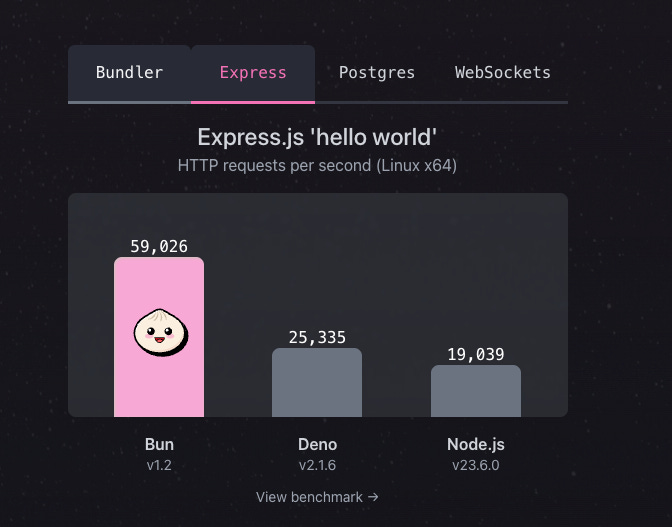
Startup Time: Bun starts up ~4x faster than Node.js. This “cold start” speed is critical for serverless functions and, crucially, for AI agents that spin up thousands of micro-processes.
Package Installation: It installs packages 20x–30x faster than npm.
Throughput: It handles significantly more HTTP requests per second than Node or Deno
Here’s the fascinating part: Bun joined Anthropic, making $0 in direct product revenue. With over 7.2 million monthly downloads and a team of 14, they had a classic startup problem: fantastic adoption, but no clear business model yet.
Their planned path was a cloud hosting platform, but the rapid rise of AI coding tools changed the calculus. As Bun’s founder Jarred Sumner put it, betting on Anthropic was “a more interesting path” than the uncertain grind of startup monetization.
For developers and companies betting on Bun, this is huge. The question “Will Bun be around in 10 years?” now has a powerful answer: Yes, because its survival is now tied to Anthropic’s core AI product strategy, not VC patience.
What Anthropic Really Bought: Speed, Control, and Distribution
Forget the generic “performance” talk. Anthropic acquired Bun for three concrete, strategic advantages that are critical for AI agents:
The Need for Speed (That Actually Matters): It’s not just about benchmarks. When an AI agent writes, runs, tests, and debugs code in a loop, every millisecond of latency compounds. Bun’s architecture delivers the instant startup and execution that turns Claude from a thoughtful coder into a rapid-fire executor.
Owning the Critical Dependency: As Jarred Sumner, Bun’s founder, bluntly put it: “If Bun breaks, Claude Code breaks.” Acquiring Bun eliminates a fundamental risk for Anthropic’s flagship product. They’ve moved from a vulnerable partnership to complete control over their supply chain.
The Most important Feature for AI: Single-File Executables. This is Bun’s silent superpower. It can compile an entire application into one binary. For Anthropic, this means:
Flawless Distribution: Claude Code’s CLI and tools ship as a single download. No
node_moduleshell, no version conflicts for users.The “It Works Everywhere” Guarantee: It creates a consistent, predictable environment for AI-generated code to run, which is a nightmare to solve otherwise.
The Strategic Signal: From Copilots to Integrated Stacks
This acquisition tells us where Anthropic and how big LLM provider companies are seeing the future of AI assistant development
Infrastructure is the New Moat: Google has its TPUs, and now Anthropic has Bun. As AI agents write more code, the runtime that executes it becomes a strategic layer for performance, security, and reliability. LLM provider companies are running into control of the full circle.
The Shift from Editors to Stacks: The future isn’t about the best standalone IDE. It’s about tightly integrated, opinionated stacks where the model, agent framework, and runtime are co-designed. Anthropic can now shape Bun’s roadmap in lockstep with Claude’s capabilities.
Preparing for an Agentic Flood: If AI agents are about to generate a tsunami of code, you need a runtime that’s built for that world: fast, predictable, and easy to deploy everywhere. Bun’s single-file executable story is perfectly suited for this future.
For Developers: What Changes and What Doesn’t
If you’re a developer using or considering Bun, here’s the real impact:
The Good News (Stability): The biggest risk to Bun: a VC-backed open-source project with no clear business model, is gone. Its survival is now tied to a product with a $1B run-rate. Anthropic has explicitly committed to keeping Bun open-source and MIT-licensed.
The Watch-Out (Roadmap Alignment): The primary stakeholder for Bun’s future is now Claude Code. While this aligns with general needs for speed and stability, the community will watch if broader ecosystem features (like advanced Node.js compatibility) remain top priorities.
Generalized coding approach?
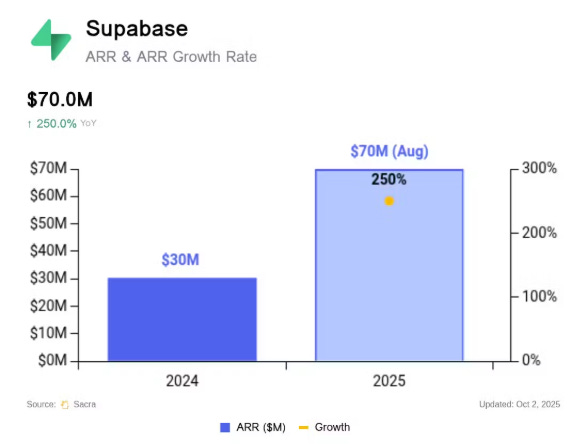
When vibe codes tools started, Supabase saw a huge growth, not only because of how good it is, but also how easy it is to integrate it with tools to do the Deployment. This made Supabase the go-to Product when it comes to Backend Hosting.
If you ask the AI to write a VueJS code for something and same ReactJs, it will be better in ReactJS in term of best practices and performance, not only because Reactjs if more powerefull, but because the amount of code base that an AI learn with from React Js.
The same approach for BunJS, this will assure the end-to-end code writing, and will create the same environment for Vibe coding tools, that is scalable, fast, and all in one tooling. This is how the future of software engineering is going for LLM big tech.
The question is, are we going to use the same Programming language and stack for future apps? React.js for front-end, Bun.js for Backend and tooling, React native for mobile, Supabase with Postgres, and Vercel for hosting? Or we will get to some point where the AI excels in all the languages, and doesn’t matter the language used? So that means all the legacy system code, the goal is to migrate to new tools? A lot of open questions about the future of AI and AI coding tools.
Another thing that made Supabase become that powerful, not only how easy it is used, which, in my point of view is not the easiest Postgres development platform, but it is because of the amount of documentation that it has, the open source examples, and easy-to-integrate articles. This is how you make sure your tool will be used in the Development environment.
Final Thoughts
This isn’t just about JavaScript. It’s about the entire software development lifecycle being reshaped by AI.
We’re moving from a world of human-written code in generic tools to a world of AI-generated code running on optimized, purpose-built infrastructure. Anthropic’s acquisition of Bun is one of the clearest signs yet that the big AI players are building complete, vertically integrated platforms for this new era.
The role of the software engineer is evolving from coder to architect and orchestrator of AI agents. And the tools we use:” from the model down to the runtime “: are consolidating into powerful, end-to-end stacks. The race isn’t just for the best AI model anymore; it’s for the best AI-powered development universe.